
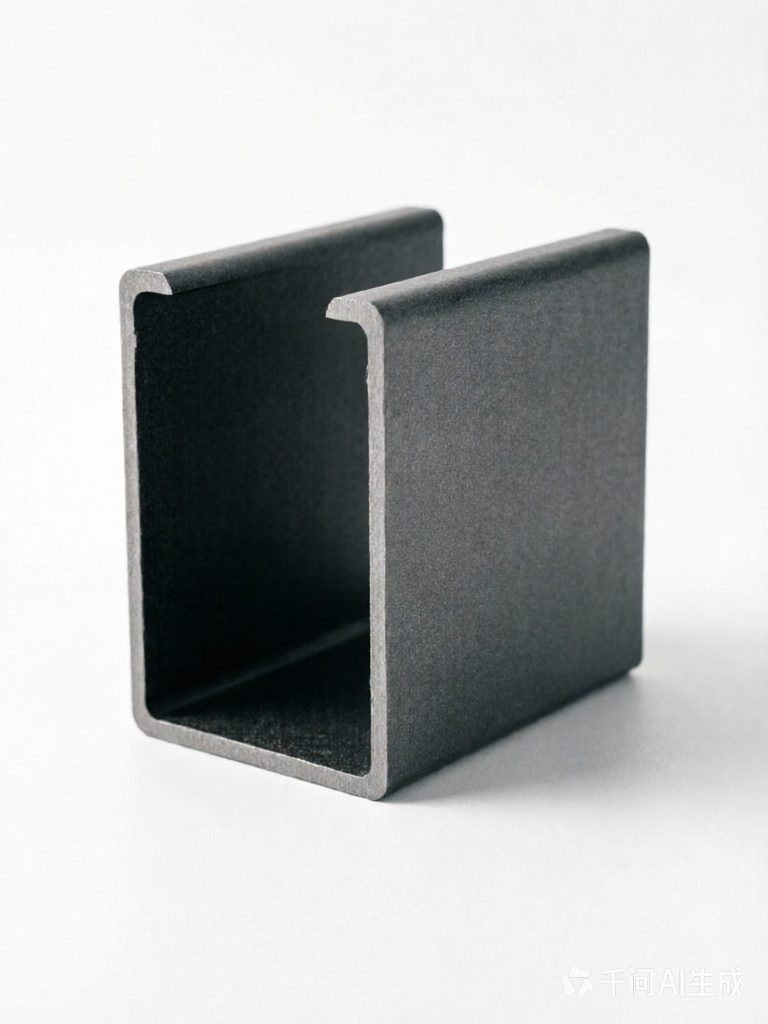
Aluminum product surface
Hard Anodizing Service
Hard anodizing to 50-80 um, HV 400-600 and 1500 V breakdown. Film growth and the dimensional allowance are agreed against your drawing.
Produktdetails
Kurze Antwort: hard anodizing grows a ceramic aluminum-oxide layer into the surface of the part itself, not a coating on top of it. On 6061 or 7075 we run 50–80 µm as standard, reaching HV 400–600 and holding off 1,500 V or more. The number that catches most buyers is not the hardness, it is the film growth: roughly half the thickness builds outward, so every mating dimension has to be allowed for before the part is machined. We confirm the film thickness and the allowance against your drawing, and we tell you the achievable tolerance before production rather than after.
What the process actually does
Anodizing is not painting. The aluminum surface is converted into aluminum oxide by passing current through it in an acid electrolyte. Because the oxide forms out of the metal rather than being deposited onto it, the layer is chemically part of the part, and it cannot flake off the way a coating can. Ordinary anodizing stops at 5–25 µm. Hard anodizing runs the same reaction harder and colder: a stronger voltage, a denser current, an electrolyte held near freezing. The result is a much thicker, much harder, considerably more brittle layer.
That brittleness is the trade-off nobody mentions in a catalogue. A 100 µm hard film resists abrasion far better than a 15 µm decorative film, but it also cracks if the part is bent afterwards, and it concentrates stress at sharp internal corners. So the film thickness is a process decision, not a specification to maximize: a sliding wear face wants thickness, a part that will be pressed or impacted wants less, and a part with tight fillets needs the radius opened up before coating.
The second consequence is dimensional. The oxide occupies more volume than the aluminum it replaced, so the surface stands proud of the original datum by roughly half the film thickness, while the same amount is consumed inward. A 60 µm film therefore adds about 30 µm per coated face. On a shaft that has to run in a bearing, that is the difference between a fit and a scrap part, which is why the allowance has to be agreed at the drawing stage and not discovered at inspection.
Spezifikationen
| Element | Bereich |
|---|---|
| Prozess | Sulfuric-acid hard anodizing, low-temperature bath, pulsed or special-waveform supply; sealing after coating |
| Schichtdicke | Reference ≥ 25 µm; standard 50–80 µm; up to 250 µm on request — set by your drawing |
| Micro-hardness | Reference HV ≥ 350; HV 400–600 typical on 6061 and 7075 industrial profiles |
| Dielectric breakdown | Reference ≥ 1,500 V, scaling with film thickness |
| Salt-spray resistance | Up to several thousand hours after sealing, depending on film thickness and alloy |
| Dimensional effect | Roughly 50% outward growth against the film thickness; allowance agreed per drawing |
| Friction coefficient | 0.1–0.3, running without oil in many sliding applications |
| Appearance | Gray-brown through dark gray to near black; the color deepens as the film thickens and is not a dye |
| Legierungen | 6061-T6, 6063-T5, 7075-T6, 2A12 and other wrought alloys |
| Maximale Teilelänge | 6,500 mm |
| Bath temperature | 0–5 °C, low-temperature electrolyte |
| Current density | 2–5 A/dm², direct current |
| Working voltage | ≥ 25 V, against under 18 V for ordinary anodizing |
| Referenznorm | GB/T 19822-2024 for hard anodic oxide coatings on aluminum |
| Prüfung | Film thickness and micro-hardness reported per batch; breakdown voltage and salt spray on request |
Hard anodizing against ordinary anodizing
| Eigenschaft | Hard anodizing | Ordinary anodizing |
|---|---|---|
| Schichtdicke | ≥ 25 µm; 50–80 µm standard, to 250 µm | 5–25 µm |
| Micro-hardness | HV 350 minimum; 400–600 typical | HV 200–350 |
| Dielectric breakdown | ≥ 1,500 V | Low; not an insulation specification |
| Salt spray | Several thousand hours after sealing | Hundreds of hours |
| Color range | Gray-brown to black only; no bright colors | Wide, including clear, black and dyed colors |
| Best use | Wear faces, sliding surfaces, insulation, heat | Appearance, corrosion resistance, light wear |
The color line is worth stating plainly. Hard anodizing cannot be made silver, blue or red. The gray-brown to black tone is what the thick oxide itself looks like, which is also why it does not fade: there is no dye to fade. If a part has to match a corporate color, hard anodizing is the wrong process, and powder coating or ordinary anodizing is the right one.
How the coating is controlled
Film hardness is not set by a single dial. Four variables decide it, and the bath has to be right on all four for the numbers in the table to mean anything.
- Bath temperature. Held at 0–5 °C. The colder the electrolyte, the denser and harder the growth; let it drift toward room temperature and the film softens and starts to chalk.
- Current density. 2–5 A/dm². Push it higher to speed the process and the film burns: it grows porous and powdery instead of dense.
- Voltage. 25 V and up, against under 18 V for ordinary anodizing. The voltage has to be ramped, not switched on, or the part is damaged before the film can form.
- Electrolyte. Sulfuric acid with organic acid additions such as oxalic or tartaric, which keep the film ductile enough to survive service without crazing.
There is also a material precondition that gets skipped. Film hardness tracks the substrate: on pure aluminum the oxide can reach HV 1,500, while on wrought alloys it lands at HV 400–800. Within that band 7075 and 2A12 coat harder than 6063, because of the alloying elements, but they also behave differently at the corners. If a drawing assumes one hardness number across two different alloys, that assumption needs correcting before the parts are made.
Wo dies passt
- Sliding and wear faces that run dry or lightly lubricated, where the 0.1–0.3 friction coefficient removes the need for oil
- Parts that must insulate as well as resist wear, such as fixture bodies and electrical hardware, where the 1,500 V breakdown matters more than the abrasion figure
- Components exposed to abrasion plus moisture, where a sealed hard film outlasts both paint and ordinary anodizing
- Surfaces that see heat, since the oxide stays stable far above the melting point of the substrate
- Aluminum replacing steel or bronze in a wear application, where the weight saving only works if the surface can take the contact pressure
Wo es nicht passt
- A part that must be a bright color, or match a painted housing. Hard anodizing is gray-brown to black and nothing else.
- A precision fit with no allowance left in the drawing. The film will move the surface by roughly half its thickness, and there is no way to coat a part that has already been finished to final size.
- Thin walls and long unsupported sections, which can distort under the current and the bath.
- A part that will be bent or formed after coating. The film cracks; form first, coat last.
None of these is a reason to avoid the process, but each one changes the drawing. Raising them at quotation stage costs a drawing revision; raising them after coating costs the parts.
Was für ein Angebot zu senden ist
- The drawing, with the surfaces to be coated marked and the surfaces to be left bare marked
- The alloy and temper, since hardness and color both follow the substrate
- The required film thickness, or the wear duty and contact pressure if the thickness is still open
- Which dimensions are critical after coating, so the allowance can be set against them
- Whether the part needs sealing, and whether it needs a breakdown-voltage figure or a salt-spray figure
- Menge und die längste Einzellänge, geprüft gegen die 6.500-mm-Grenze
If the drawing is not finished, send the part in service, the contact pressure and the environment instead. The film thickness and the allowance can be proposed from that.
FAQ
What tolerance can you hold on film thickness?
Film thickness is held to the range agreed on the drawing, and we report the measured value per batch rather than an average. As a reference we run 50–80 µm as standard and can hold tighter bands on request, but the achievable band depends on the alloy, the surface area and the geometry: a part with deep recesses coats less evenly than a flat plate, and the number has to account for that. We confirm what is achievable for your part before production, and if the band you need cannot be held we say so at that point.
How much does the coating change the dimensions?
About half the film thickness per coated face, outward. A 60 µm film leaves the surface standing roughly 30 µm proud of the machined datum while consuming a similar amount inward. In practice this means the part is machined undersize by that amount before coating, and any bore or shaft that has to fit something else needs the allowance written into the drawing. This is the single most common cause of a rejected hard-anodized batch.
Can you match a specific color?
No, and no supplier can. The gray-brown to dark gray to black range is the color of the oxide itself, driven by film thickness and alloy, so it varies naturally between batches. What we can do is keep a consistent tone within a batch and give you a sample-coated piece to approve before the run. If the color has to be a specific shade, powder coating is the correct process and hard anodizing is not.
Should I choose hard anodizing or ordinary anodizing?
Choose hard when the surface has to survive contact: sliding wear, abrasion, dry running, electrical insulation or heat. Choose ordinary when the part mainly needs corrosion resistance and a clean appearance, because it costs less, keeps a wider color range and does not move the dimensions as much. For a light-duty indoor part, ordinary anodizing at 10–15 µm is usually the better value.
Can you coat 7075 and 2A12?
Yes, along with 6061 and 6063. The alloy changes the result rather than blocking it: 7075 and 2A12 coat to higher hardness but are more sensitive at sharp corners and machined edges, so the edge break on the drawing matters more. Send the alloy with the drawing and the process is set accordingly.
What about parts longer than 6,500 mm?
They cannot be coated in one piece in our bath. Long rails and beams are normally split at a joint that the design already needs, coated as separate lengths and assembled afterwards. If the joint cannot be avoided we say so at quotation stage rather than after the parts arrive.
Senden Sie Ihre Zeichnung
Email linjunbing@truetrustlv.com with the drawing, the alloy and the surfaces to be coated. If the film thickness is still open, send the wear duty and the environment instead and we will propose it. You will get a process proposal, a quotation and the tolerance we can actually hold — reviewed by an engineer, not an auto-reply.
WhatsApp: +86 136 6644 0600
ANGEBOT ERHALTEN
Sobald Sie Ihre Anforderungen übermittelt haben, kontaktieren wir Sie so schnell wie möglich bezüglich Ihrer Produktanfrage.:Hard Anodizing Service